
If you’ve ever come home from a weekend with the grandkids more tired than you thought a human could be, and also somehow lighter, happier, more you, I have some validation for you. Science just caught up to what you already knew in your bones.
The Study That Backs Up What You Already Knew
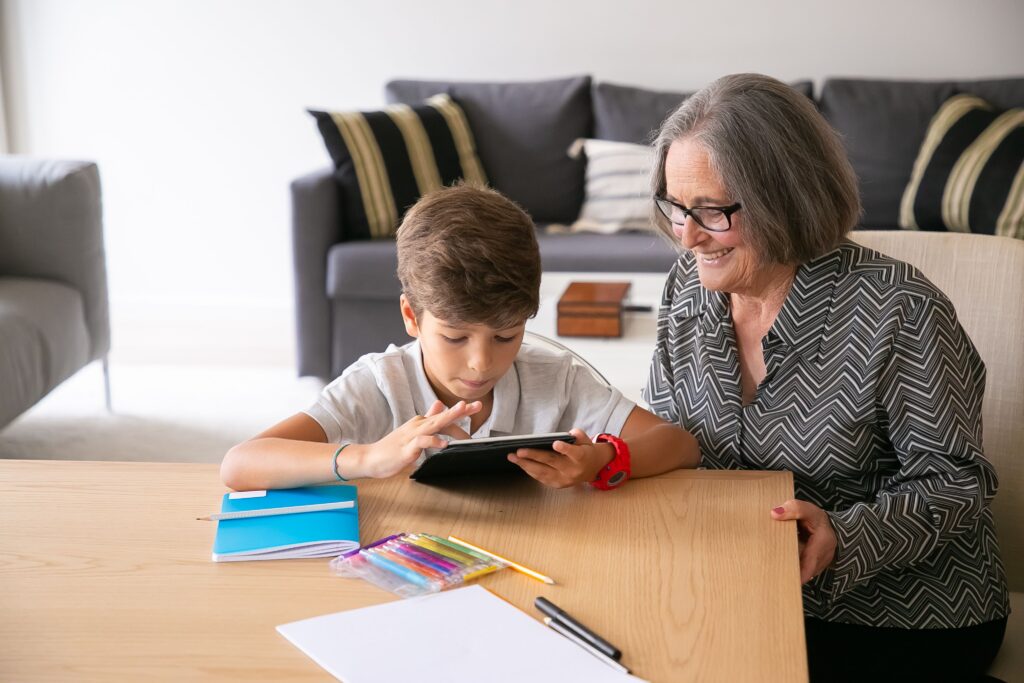
A new study out of Tilburg University in the Netherlands, published in the journal Psychology and Aging, followed nearly 2,900 grandparents over 50 for six years. Researchers gave them memory and verbal fluency tests three separate times between 2016 and 2022. The grandparents who provided childcare for their grandkids consistently outperformed the ones who didn’t, even after accounting for age and health. Grandmothers who were hands-on caregivers showed the slowest cognitive decline of the whole group.
Here’s the part I love. The lead researcher, Flavia Chereches, found that it wasn’t about how often you babysat or exactly what you did with them. Being a caregiving grandparent at all seemed to matter more than the details. It’s not the number of hours logged, it’s the relationship itself, the mental stretch of keeping up with a kid, the emotional engagement, the sheer aliveness of it.
The $900 Billion Nobody Talks About
And it turns out that aliveness has a price tag, too, just not the one you’d expect. AARP released research this summer titled “Powering Families: The Essential Role of Grandparents in Care, Connection and Support,” and the number is staggering. Grandparents contribute roughly $900 billion a year to their families, between $172 billion in direct financial help and an estimated $731 billion in unpaid caregiving. Ninety percent of grandparents surveyed give some kind of financial support. Sixty-nine percent provide childcare, averaging more than 500 hours a year. The average grandparent spends $2,654 annually on their grandkids, more than a full month of the typical Social Security check.
I read that and thought about how often grandparents downplay what they do. “Oh, I just watch them on Tuesdays.” “It’s nothing, I love having them.” Except it’s not nothing. It’s hundreds of billions of dollars a year, and apparently it’s also keeping your brain sharper than it would be otherwise. You are not “just” the babysitter. You are the childcare system, the emotional anchor, and possibly your own best defense against cognitive decline, all at once.
What This Means for Your Life Right Now

Here’s what I think this means for you, whether you’re deep in grandparent life already or you’re getting there.
First, let this be permission to say yes. If your daughter asks you to keep the kids two afternoons a week and you’ve been hesitating because it feels like a lot, know that it’s giving you something back too. That’s not me telling you to overextend yourself into exhaustion. It’s me telling you that the instinct to lean in, when it’s the right amount for your body and your life, is backed by real science now.
Second, notice the difference between caregiving and just being present. The study’s findings track with what geriatric researchers have said for years, that engagement, not passivity, is what protects the aging brain. Teaching a seven-year-old to bake, negotiating a Lego dispute, explaining why the sky is blue for the hundredth time, that’s cognitive weightlifting disguised as love.
Third, if you’re the one on the receiving end of grandparent help, whether that’s your own parents helping with your kids or you watching your friends navigate it, this is a good moment to say thank you out loud. Not just “thanks for watching them,” but “I see what this costs you and what it gives you, and I’m grateful for both.”
If Distance Keeps You Apart

And if you’re a grandparent who doesn’t get to see your grandkids as often as you’d like, because of distance or family dynamics or life just being complicated, I don’t want this article to sting instead of encourage. The research is about engagement, and engagement can look like a weekly video call, a handwritten letter, a shared hobby over FaceTime. The connection matters more than the zip code.
This is Act III we’re talking about here. The years where you get to decide what kind of life you’re building, and it turns out one of the smartest moves you can make for your own mind is investing in the people who call you Grandma or Grandpa. Not bad for something that also happens to be the best part of your week.
Relax, I got this.

214.226.3770 | RelaxIGotThis.com | Robin@RelaxIGotThis.com