You have heard the story your whole life. After a certain birthday, it is all supposed to go one direction, and that direction is down. Slower, foggier, creakier, every year a little less than the last. It is such a common assumption that most people never think to question it. They just brace for it.
Well, a group of Yale researchers went looking for that inevitable decline. What they found instead should make you rethink the whole premise.

The study that redefined “aging”
A team led by Yale psychologist Becca Levy tracked more than 11,000 Americans age 65 and older for up to 12 years, measuring both their thinking (memory and mental sharpness) and their physical function (things like walking speed and strength). If aging were a straight slide downhill, the numbers should have shown everyone getting worse.
They did not. Nearly half of the older adults improved in cognition, physical function, or both over the study period. The published figure came in right around 45%. Walking speed, one of the measures, is considered a “sixth vital sign” and a real predictor of longevity. These were not people holding steady. They were people getting measurably better in their seventies, eighties, and beyond.
The research was published this year in the journal Geriatrics, and it has been picking up steam in the mainstream press ever since. And here is the part I cannot stop thinking about.
The one thing that predicted who improved
The researchers did not just count who got better. They looked at why. Participants who held more positive beliefs about their own aging were significantly more likely to show these gains.
Read that again, because it matters. It was not just genetics. It was not just who had the best doctor or the fanciest supplements. A meaningful part of who improved came down to how people thought about getting older in the first place.
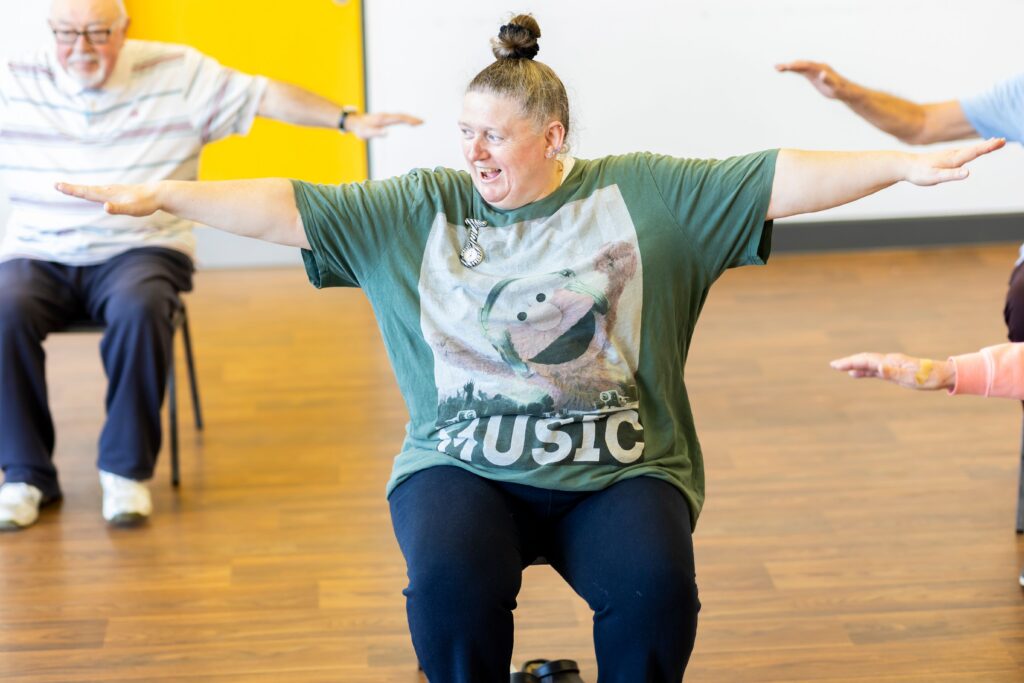
Now, I want to be careful here. This is not “think happy thoughts and you will live forever.” Nobody is saying attitude cures everything, and pretending otherwise would be an insult to your intelligence. What the research suggests is more grounded than that. The people who did not write themselves off, who assumed they still had room to grow, tended to behave in ways that gave them that room. They kept moving. They kept learning. They kept showing up.
What this actually means for your life
Here is the practical read on all this.
First, the expiration date you may have been quietly assuming is largely fiction. There are now more than 60 million adults over 65 in the U.S., about 18% of the population, and the death rate for older adults is the lowest it has been since 1999. The demographic you belong to is not fading. It is the most capable, resourced, and long-lived version of itself in history.
Second, improvement is not a young person’s privilege. If your body and brain can still get stronger at 70 or 80, then the “why bother” excuse quietly loses its footing. Bothering pays off.
Third, movement is one of the clearest levers you can pull. Another set of longevity findings this year pinpointed a sweet spot for strength training. Researchers who tracked nearly 150,000 people found that 90 to 120 minutes of strength training per week was linked to a 13% lower risk of death from any cause and a 27% lower risk of death from neurological disease. Interestingly, they found no added benefit above 120 minutes a week. So this is not about punishing yourself in a gym. It is about a couple of hours a week, total. That is doable.
This is exactly the theme I keep landing on with guests on the podcast. When I had Cindy Hendricks and Cindy Bladl on the Relax, I Got This! Embracing Life After 60 podcast, two women who have made staying active a way of life well past 60, the whole conversation circled the same truth: aging is not a roadblock, it is an opportunity for reinvention. Cindy Bladl retired from teaching P.E. and kept right on moving. Cindy Hendricks turned a lifelong fitness habit into a second career as a personal trainer. Neither of them got the memo that you are supposed to slow down and coast.
The takeaway I want you to hold onto
You are not required to buy the decline story. The data no longer supports it as a rule, only as one possibility among several. The other possibilities include getting sharper, getting stronger, and surprising the people who assumed you were done.
So the question stops being “how gracefully can I decline” and becomes something a lot more interesting: what do you want to get better at next? Pick something. Your seventies are not a waiting room.
Relax, I got this. And so, it turns out, do you.
Robin McCoy
214.226.3770 | RelaxIGotThis.com | Robin@RelaxIGotThis.com
Sources:
- Yale study on aging improvement (Becca Levy), Forbes: https://www.forbes.com/sites/robertpearl/2026/03/30/new-studies-show-americans-are-thinking-about-longevity-all-wrong/
- ScienceDaily coverage of the Yale study: https://www.sciencedaily.com/releases/2026/06/260620100428.htm
- SUCCESS, “Longevity Science 2026” (strength-training findings): https://www.success.com/longevity-research-2026-new-findings
- AOL coverage of the Yale study: https://www.aol.com/articles/yale-study-finds-secret-aging-155024313.html
- Christian Science Monitor, “Living better, not just longer”: https://www.csmonitor.com/Editorials/the-monitors-view/2026/0701/Living-better-not-just-longer
- Podcast, “The Cindy Show” episode: https://podcasts.apple.com/us/podcast/embracing-life-after-60-the-cindy-show-with/id1652082927?i=1000677522433