Somewhere along the way, most of us picked up the same story about aging. It goes like this: you peak, and then everything is a slow slide downhill. Your knees, your memory, your energy, all of it headed one direction.
Here’s the thing. That story is wrong. And now we have the research to prove it.
A new study out of the Yale School of Public Health, led by Dr. Becca Levy and published in the peer-reviewed journal Geriatrics, followed nearly 4,000 adults ranging from age 19 to 94 over three years. The researchers wanted to know what actually happens to our minds and bodies as we age, not what we assume happens.
What they found should make you sit up a little straighter. Among adults 65 and older, 45 percent improved in at least one area over those three years. About a third improved cognitively. More than a quarter improved physically. Not “declined more slowly.” Improved. Got better. At 65, 75, 85.
Let that sink in. Nearly half of the older adults in this study were getting sharper or stronger while the rest of the world assumed they were fading.
The part that changes everything
Now here’s my favorite part, and it’s the reason I wanted to share this study with you.
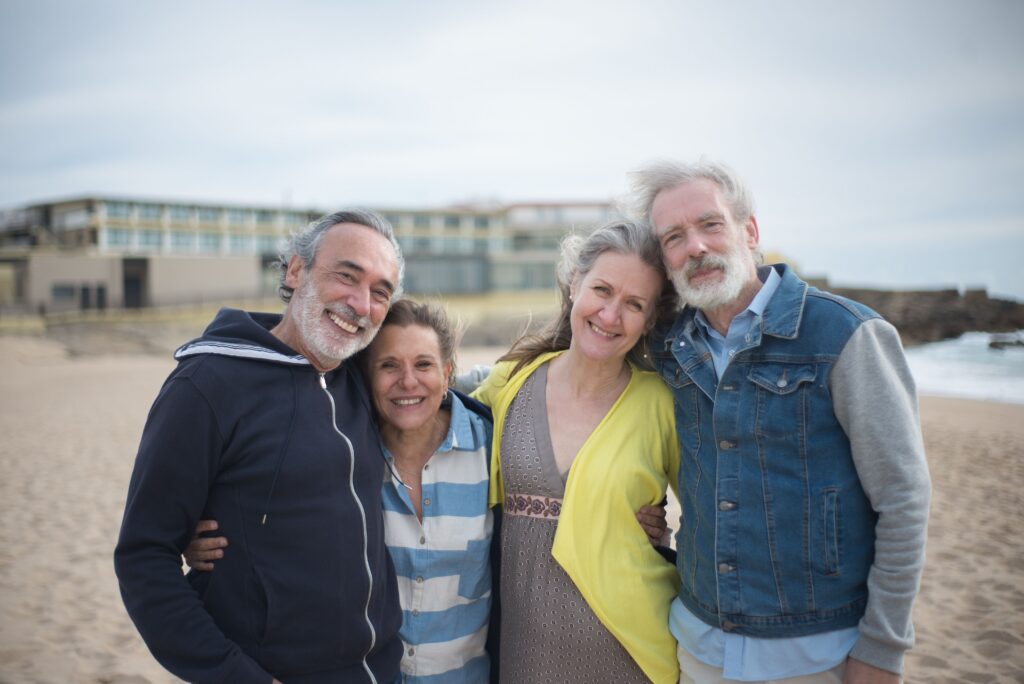
The researchers found that the people most likely to show these improvements were the ones who held more positive attitudes about their own aging.
Read that again. Your beliefs about aging are not just a mood. They are a predictor. The people who expected their later years to hold growth, learning, and capability were the ones whose brains and bodies delivered exactly that.
I talk about this constantly with my clients and my podcast listeners. When you’re facing a big Act III decision, whether that’s a move, a new chapter after loss, or simply figuring out what’s next, the story you tell yourself matters. It turns out it matters right down to the cellular level.
When I walked the Camino de Santiago, I met people in their 70s and 80s walking hundreds of miles across Spain. Not one of them got there by accident. Every single one of them had decided, at some point, that their age was information, not a verdict. This study finally puts data behind what I saw on that trail every single day.
So what do you actually do with this?

Good news. The same body of 2026 research gives us something concrete.
Alongside the mindset findings, researchers tracking more than 147,000 people over 30 years pinned down a sweet spot for strength training: 90 to 120 minutes per week. That amount was linked to a 13 percent lower risk of death from any cause and, here’s the underreported part, a 27 percent lower risk of death from neurological disease. Strength training protects your brain, not just your biceps. And there was no added longevity benefit beyond 120 minutes, so nobody needs to move into the gym.
That’s two hours a week. Two episodes of your favorite show. You can split it into three or four short sessions with resistance bands in your living room.
Protecting your brain is a topic we’ve gone deep on before. My guest Dr. David from the Brain and Body Foundation joined me on the podcast to break down the “Dirty Dozen,” twelve everyday factors that quietly harm brain health, along with the nutrients your brain actually needs to stay sharp. If this week’s research has you motivated, that episode is a great next stop.
But honestly, the workout is the second assignment. The first one is the mindset audit. For one week, catch yourself every time you say or think something like “I’m too old for that” or “my memory isn’t what it used to be.” You don’t have to argue with the thought. Just notice it, and ask one question: is that a fact, or is that the old story?
Because here’s what this research really tells us. Aging is not one straight road downhill. It’s a trail with climbs and descents and some genuinely gorgeous stretches you can’t see from where you’re standing. And the people who expect the good stretches are the ones most likely to find them.
You’re not done growing. Science just confirmed it.
If you’re standing at one of those trail markers right now, wondering what your next chapter looks like, I’d love to help you read the signs. Relax, I got this.
Robin McCoy, Realtor® and Senior Home Coach™
214.226.3770 | RelaxIGotThis.com | Robin.RelaxIGotThis@gmail.com
Sources
SUCCESS Magazine, “Longevity Science 2026: 5 Findings Worth Knowing” https://www.success.com/longevity-research-2026-new-findings