
Somewhere between the turkey and the pie, it happens. A cousin brings up the one thing nobody was supposed to bring up. Your sister side-eyes your stuffing. Someone asks your adult son, again, when he plans to settle down. And the whole table quietly turns to see what you’ll do next.
Here’s what I want you to know before the invitations start rolling in: you are better equipped for that moment than almost anyone else in the room. That’s not a pep talk. That’s research.
The Good News Hiding in the Holiday Stress Numbers
Holiday stress is real, and it’s climbing. In the American Psychiatric Association’s Healthy Minds poll from last November, 41% of adults said they expected more holiday stress than the year before. Grief and missing someone topped the list of worries, followed by affording gifts, and roughly a third of people named challenging family dynamics.
But look a little closer and the 60+ crowd keeps showing up on the bright side of the data. In the association’s 2024 poll, more than half of adults ages 18 to 34 worried about affording gifts, compared with just 38% of people 65 and older. And AARP’s most recent loneliness research (December 2025) found that 46% of adults ages 45 to 59 are lonely, versus 35% of people 60 and older, a pattern that has held steady since AARP started asking in 2010.
Translation: the people stressing hardest at the holiday table often aren’t us. They’re our kids. Which means we get to be the steady ones.
You’ve Had Decades of Practice (and It Shows)
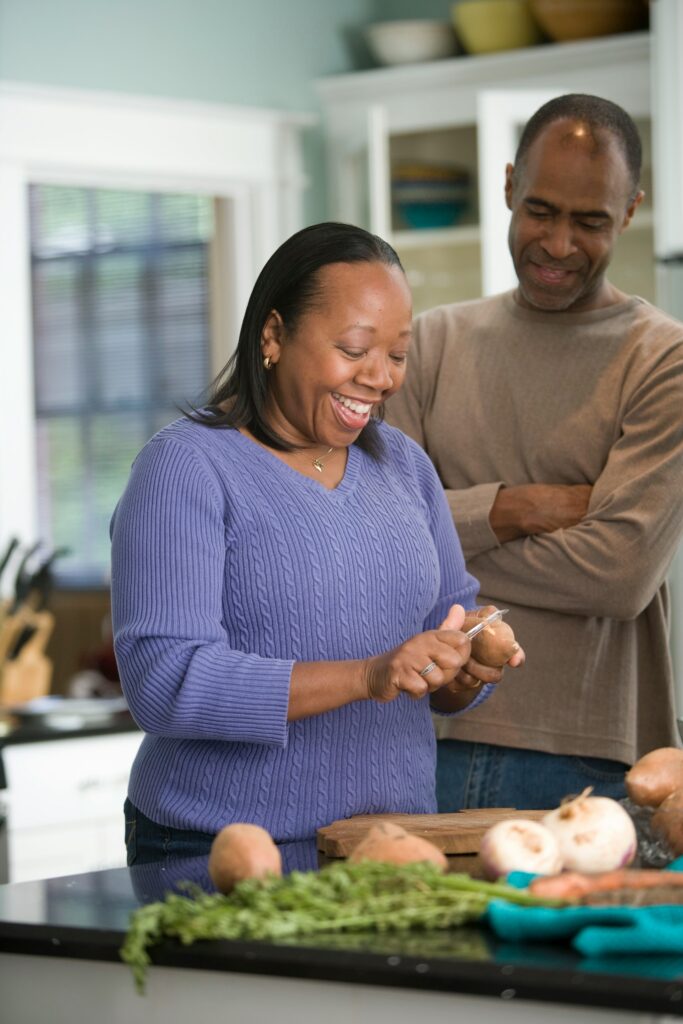
Researchers who study emotion and aging keep landing on the same finding. In a well-known daily diary study that followed 666 adults ages 25 to 74 for eight evenings, older participants reported fewer tense moments with other people, felt less stressed by them, and argued less often. They were also more likely to simply let a slight pass.
That same body of research includes an honest caveat, and I appreciate it: when an argument actually breaks out, it stings at any age. Experience doesn’t make us bulletproof. It makes us better at choosing which battles are worth letting the gravy go cold.
That’s a skill. You earned it raising kids, managing careers, saying goodbye to people you loved, and surviving more than one family reunion. This year, use it on purpose.
Loving the Difficult Ones Without Losing Yourself

Every family has one. Some families have a whole roster.
When Katina Wilkins, a Christian life coach, author, and speaker from the Dallas area, joined me on Episode 50 of the podcast, we dug into exactly this: what makes certain people hard to love, where forgiveness fits, and how to set boundaries that are loving rather than punishing. Katina’s book, Love Is…Complicated, treats love as both a calling and a daily practice, and our conversation kept circling back to the idea that love is a choice, one that’s a lot easier to make with curiosity and compassion than with a scorecard.
Here’s what I took away. Boundaries aren’t walls. They’re guardrails that let you stay in the relationship without driving off a cliff. You can love your brother and still leave before his third glass of wine. You can forgive your mother and still decline to discuss your weight with her. Both things can be true at the same table.
And sometimes the most loving boundary is a shorter visit, a phone call instead of a weekend, or a brand-new tradition. That isn’t failure. That’s wisdom with good timing.
Gratitude Is Doing More Than You Think

This next part made me smile. A Harvard study published in JAMA Psychiatry looked at 49,275 older women from the Nurses’ Health Study. Those with the highest gratitude scores had a 9% lower risk of death from any cause over the following four years than those with the lowest scores, even after researchers accounted for health history, lifestyle, and social factors.
The study shows a link, not proof of cause and effect. Still, the lead researcher pointed to a simple way to build the habit: writing down or talking about what you’re thankful for a few times a week. Thanksgiving, conveniently, comes with a built-in prompt. You just have to say it out loud.
Your Holiday Game Plan
Here’s what I’m suggesting to clients and friends this season:
- Decide your exit before you arrive. Know how long you’ll stay and how you’re getting home. The freedom to leave makes it much easier to stay pleasant.
- Pick your “not today” topics. Choose one or two subjects you simply won’t take the bait on, and have a friendly pivot ready. “Let’s save that one for January. Who wants pie?”
- Let people help. Butterball’s 2026 Togetherness Report found that 85% of Thanksgiving hosts want guests to pitch in, but only 38% actually ask. Hosting? Ask. A guest? Grab a dish towel before anyone has to.
- Make gratitude audible. Toast someone specific. Write three thank-you notes in December. Tell the grandkids one story about someone who isn’t at the table anymore.
- Set a place for someone. If a neighbor or friend will be on their own, invite them, even just for dessert. On average, adults over 60 are less lonely than midlife adults, but averages don’t live across the street from you.
The holidays don’t have to be perfect to be good. They just have to be honest, a little forgiving, and full of the people (and pie) you choose.
You’ve had decades to practice grace under pressure. This is the season to enjoy it.
And if all that family time gets you thinking about the bigger picture, like whether the family home still fits or how to start that conversation with your kids, I’m always happy to talk it through. No pressure, just a plan.

Robin McCoy, Realtor® and Senior Home Coach™
214.226.3770 | RelaxIGotThis.com | Robin@RelaxIGotThis.com
Sources
- American Psychiatric Association: Americans More Anxious About the Holidays (Nov. 2025)
- Psychiatric News: More Americans Express Anxiety About Holidays
- American Psychiatric Association: Holiday Stress Poll (Nov. 2024)
- AARP: Loneliness Is on the Rise, Affecting 4 in 10 Older Adults (Dec. 2025)
- ScienceBlog: Older Adults, Emotional Regulation, and Conflict
- The Brighter Side of News: Harvard Gratitude and Longevity Study (JAMA Psychiatry)
- Butterball 2026 Togetherness Report
- Relax, I Got This! Podcast, Episode 50 with Katina Wilkins